Brand System with Integrated AI
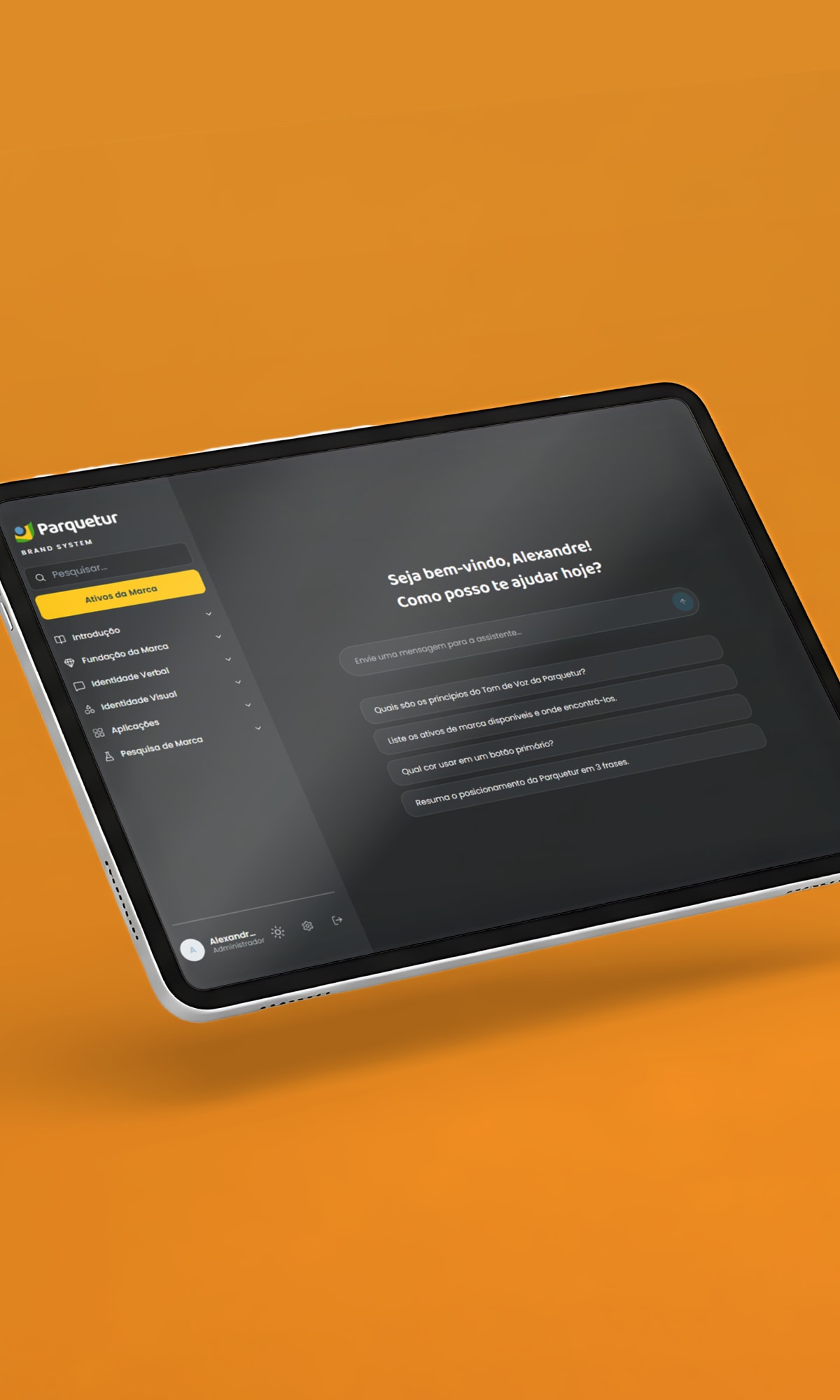
I centralized Parquetur's brand into an intelligent platform, entirely coded with AI, for brand asset lookup and real-time cross-referencing of data.
Role
Product Designer
Year
2026
Focus
Design System · Brand Strategy · AI Engineering
CONTEXT
Brand guidelines scattered across PDFs and slides
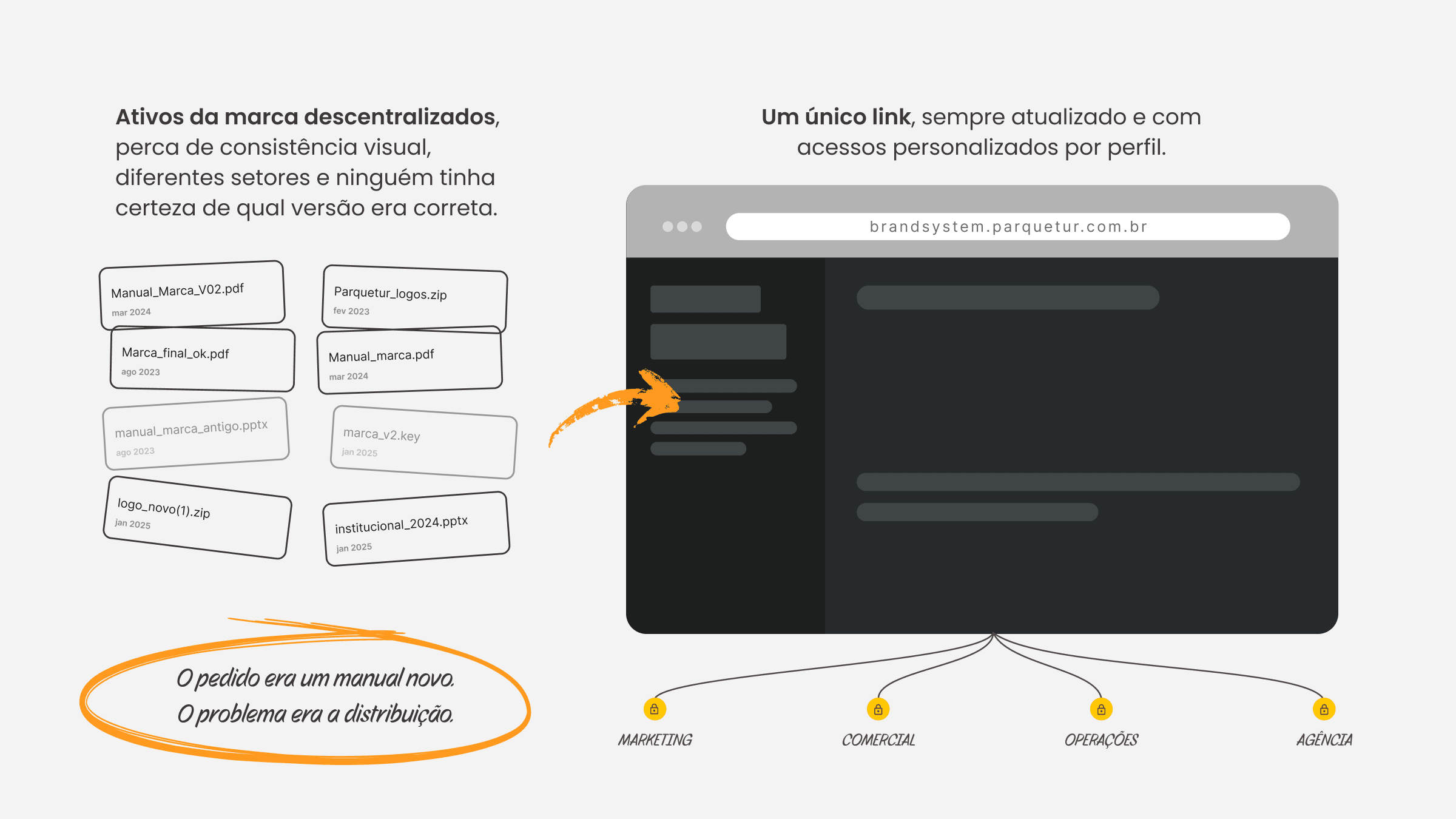
Parquetur kept its brand guidelines in PDF manuals, presentations and spreadsheets spread across different folders and owners.
Each team consulted a different version, with no guarantee it was the latest one. I joined to propose a central solution to this problem.

PROBLEM
The request was a new manual, the problem was distribution
The team asked for an update to the brand manual PDF.
But digging deeper, the real obstacle surfaced: nobody was sure which version was the correct one. With different departments working from files saved on their own machines, the brand lost consistency with every launch. Building a new PDF would only postpone the problem by a few months, because the distribution model itself was still broken.
STRATEGY
A living platform, designed to grow with the brand
Instead of another PDF, I proposed a navigable web platform, with controlled access and content structured by section.
I designed the architecture to evolve beyond a static manual, opening room for data and intelligence applied to the business.
SOLUTION
One platform for brand governance and business insight
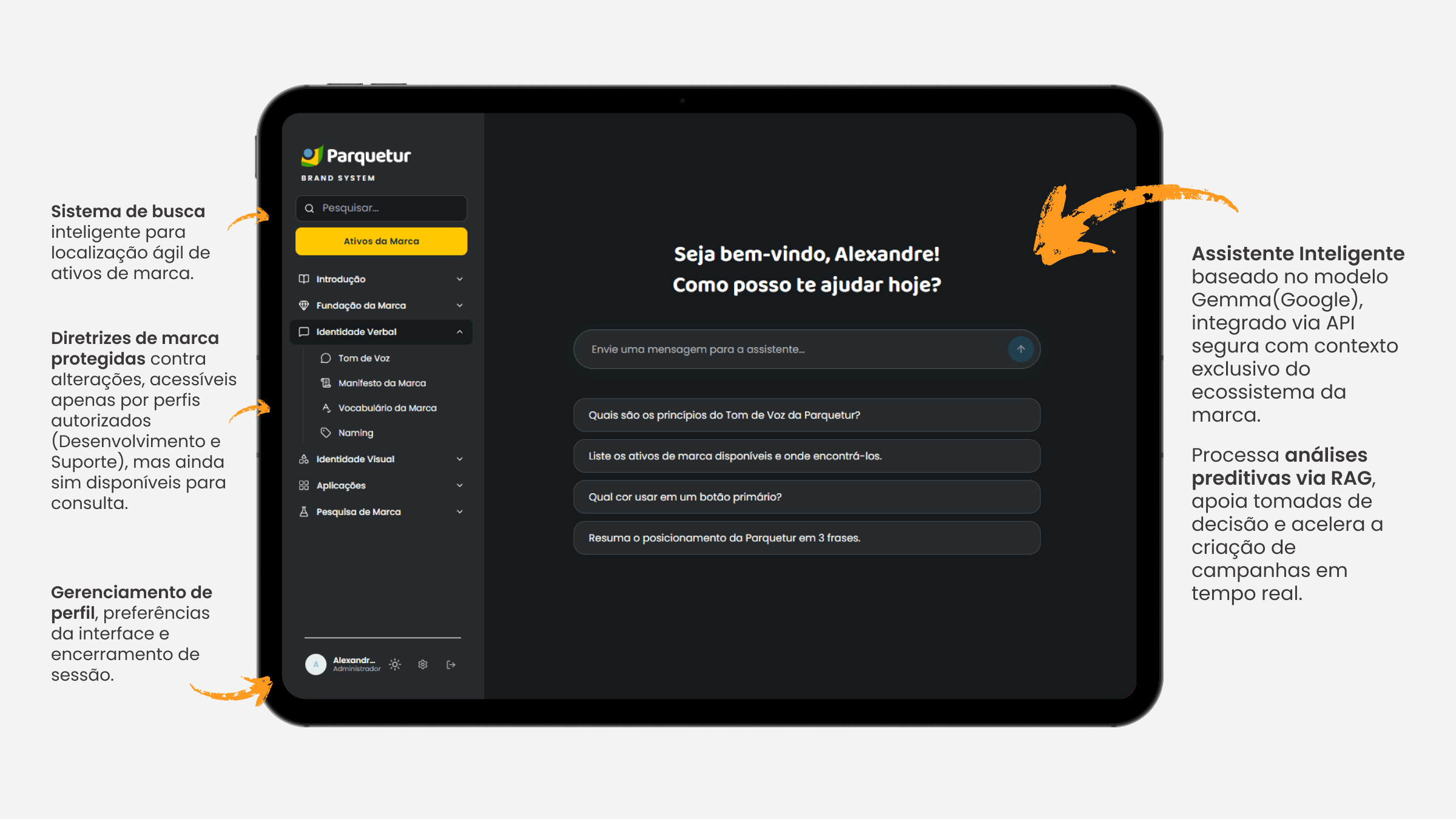
I built an application that replaces static files with a single source of truth: a centralized environment with color tokens, official typography and assets organized to scale.
To raise the product's value, I integrated an AI assistant fed by real-time operational data. It answers questions about vital metrics such as ticket sales, revenue per product and month-over-month comparisons, tying brand management to decision-making.
MY ROLE
From strategy to code, start to finish
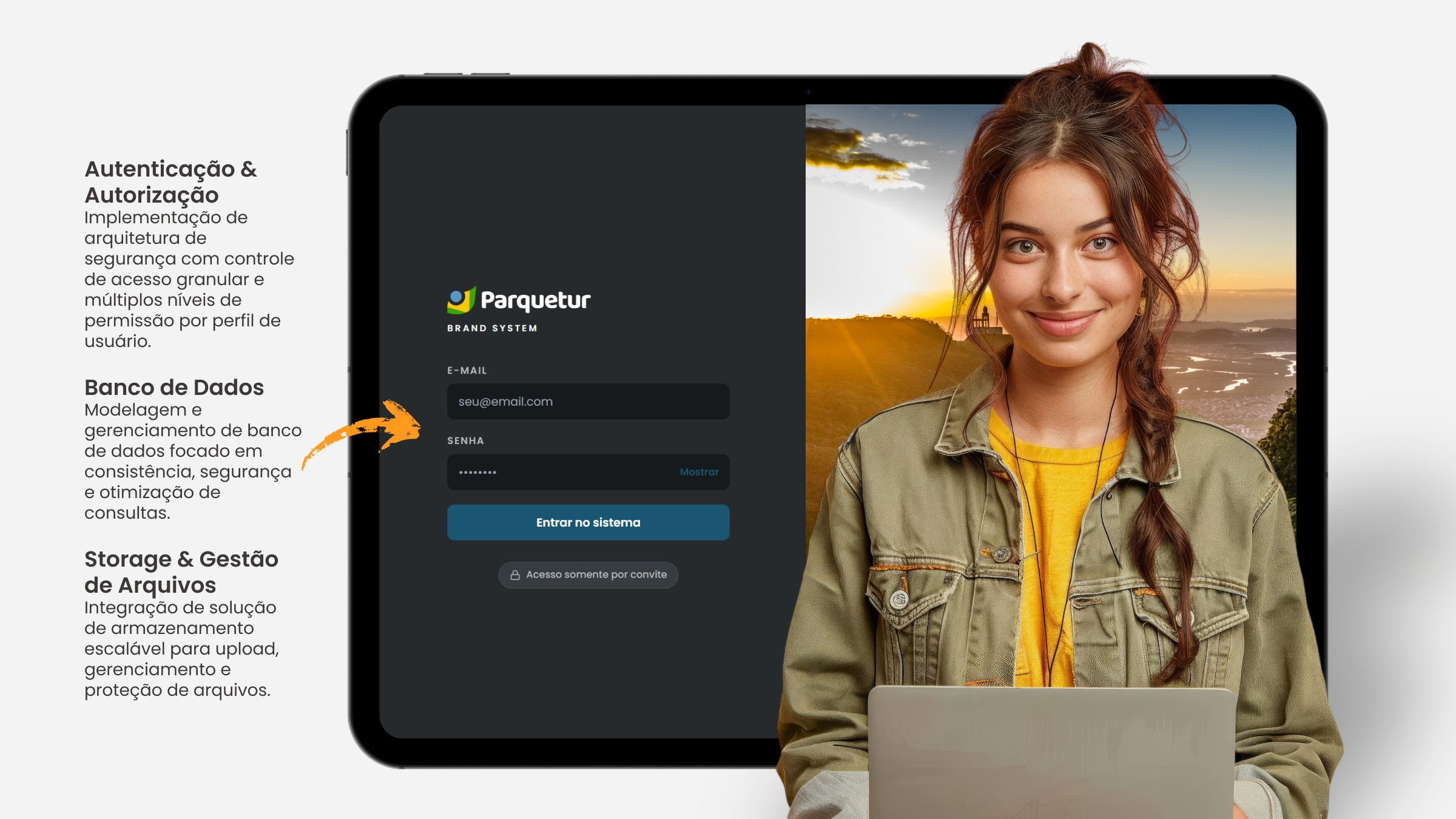
To get the project off the ground efficiently, the first step was designing the business and usage model for the platform. I analyzed the technical and operational requirements to understand exactly what it would take to make delivery viable, from asset governance to the AI's real-time data consumption.
From that planning, I ran the entire development track. I built the component library and the design system tokens, structured the data pipeline and accelerated building the application directly in the IDE, using Claude Code through the integrated terminal. That approach let me implement and refactor the final code with agility, connecting design and engineering with no intermediaries.
IMPACT
Adoption, governance and decisions backed by data
Replacing the static file with a digital ecosystem drove strong adoption, passing 150 active users. That shift unified internal communication and secured full governance over the company's visual identity, preventing rework and misalignment in new campaigns.
Integrating the assistant with operational data raised the role of the brand inside the organization. Today the tool is not only for consulting visual assets, but acts as a business intelligence advisor, delivering performance analysis, revenue tracking per product and growth projections for leadership and managers.
OUTCOME
The distribution model became the product
The platform is in production as the brand's official reference. What changed was not the format of the manual but the distribution model: there is a single address for the brand, with controlled access and always-current content, and the question "which version is the right one?" simply stopped existing.
The architecture held up the growth planned from the start. New sections, assets and data sources come in without rebuilding the foundation. That is what let the platform move from brand reference to decision support without having to become a different product.
The lesson I take from it is about framing the problem before solving it. Delivering exactly what was asked, a new PDF, would have cost the same effort with a shelf life of a few months. Investigating why the material kept getting lost is what turned a design job into a tool that became part of the operation.